
When selecting a salt-free water conditioner for well water, the focus shifts from simply managing hardness to addressing the specific mineral complexities found in private wells. Well water often carries higher concentrations of iron, manganese, and sediment that can interfere with standard conditioning processes.
The following guide explores high-performance systems designed to protect your home’s plumbing and appliances without the use of salt or harsh chemicals.
Your Well Water Challenges
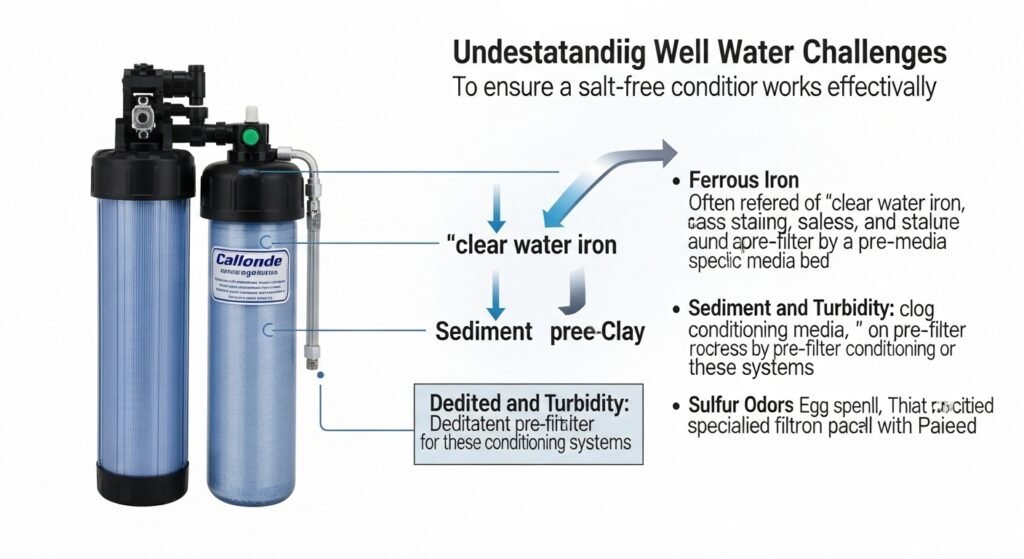
Unlike municipal water, well water is untreated and can vary significantly in quality. To ensure a salt-free conditioner works effectively, it is essential to identify:
- Ferrous Iron: Often referred to as “clear water iron,” this can cause staining and scale if not addressed by a pre-filter or a specific media bed.
- Sediment and Turbidity: Sand, silt, and clay can clog conditioning media. A dedicated sediment pre-filter is a standard requirement for these systems.
- Sulfur Odors: That “rotten egg” smell requires specialized filtration usually paired with the conditioning unit.
Top Recommendations for Well Water Systems
1. Premium Whole House Filter & Salt-Free Conditioner Combos
For well owners, a standalone conditioner is rarely enough. The most effective setups use a multi-stage approach:
- Stage 1: Sediment Pre-Filtration: High-micron filters catch physical debris before it enters the main system.
- Stage 2: Iron and Manganese Reduction: Specialized media (like KDF-85 or Manganese Dioxide) oxidizes and removes heavy metals.
- Stage 3: Template Assisted Crystallization (TAC): This is the core “salt-free” technology. It transforms dissolved hardness minerals into microscopic crystals that remain suspended in the water rather than sticking to your pipes and heating elements.
2. Specialized Scale Prevention for High-Flow Homes
If you have a large home with high water demand, look for systems with larger tank diameters and high-flow valves. This ensures that even when multiple showers or appliances are running, the water has enough “contact time” with the TAC media to be effectively conditioned.
3. Low-Maintenance Solutions
One of the primary benefits of transitioning to a salt-free system for well water is the reduction in maintenance.
- No Brine Tanks: You won’t need to haul heavy bags of salt or deal with messy brine discharge.
- No Electricity: Most TAC-based conditioners operate via water pressure alone, making them ideal for rural areas where power reliability might be an issue.
- Zero Waste: Unlike traditional softeners that require backwashing, these systems do not waste water, preserving your well’s recovery rate.
Spotting the Signs: How Hard Well Water Destroys Your Home
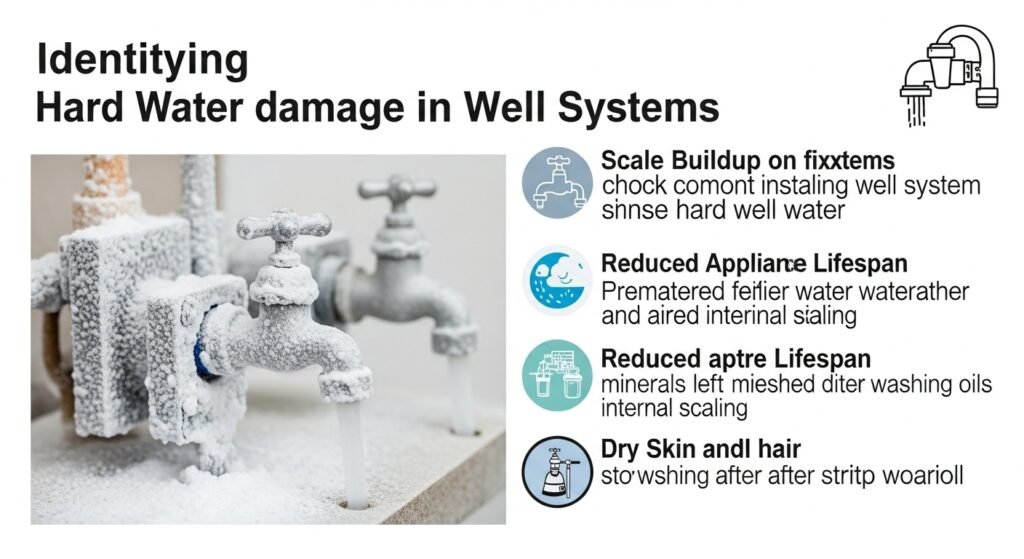
Before installing a new system, check your home for these common signs of hard well water:
- Scale Buildup on Fixtures: White, crusty deposits on faucets and showerheads.
- Reduced Appliance Lifespan: Premature failure of water heaters and dishwashers due to internal scaling.
- Dry Skin and Dull Hair: Minerals left behind after washing can strip natural oils.
By moving toward a clear filtration and salt-free conditioning strategy, you can protect your home’s infrastructure while enjoying water that feels natural and remains mineral-rich without the “slimy” feel often associated with salt-based softeners.ng with iron, sulfur, or heavy scale.