
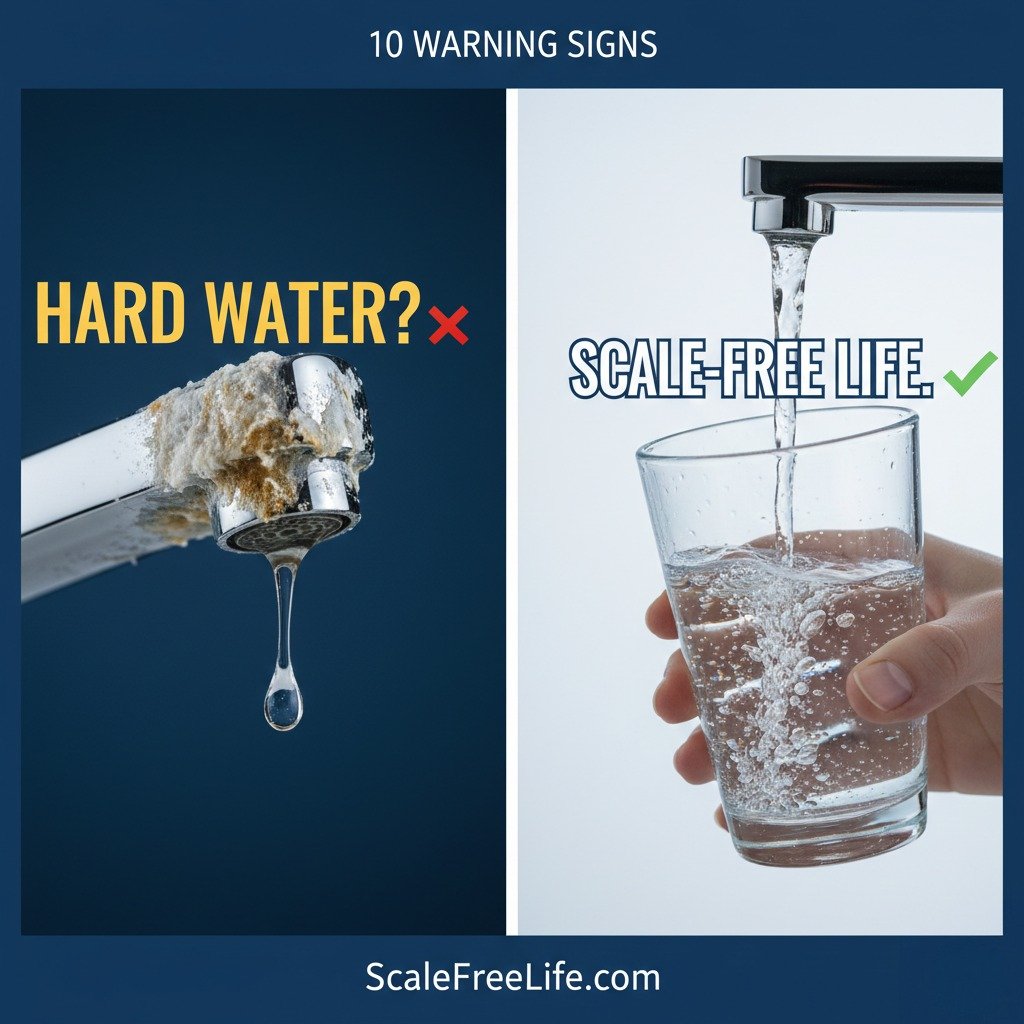
Living in the Texas —or traveling across the country in an RV—means dealing with a wide variety of water quality issues. But there is one “silent saboteur” that ruins appliances, destroys plumbing, and even affects your physical appearance: Hard Water.
Most homeowners and renters don’t realize they have a hard water problem until they are faced with a massive repair bill or a clogged showerhead. The high concentration of calcium and magnesium in our local supply acts like liquid rock, slowly coating everything it touches in a layer of crusty scale. Whether you are on a city line in a new townhome or pulling from a private well, the damage is the same.
Are you tired of scrubbing white spots off your glasses or dealing with dry, itchy skin? We’ve compiled the 10 most obvious signs of hard water so you can diagnose your home in minutes.
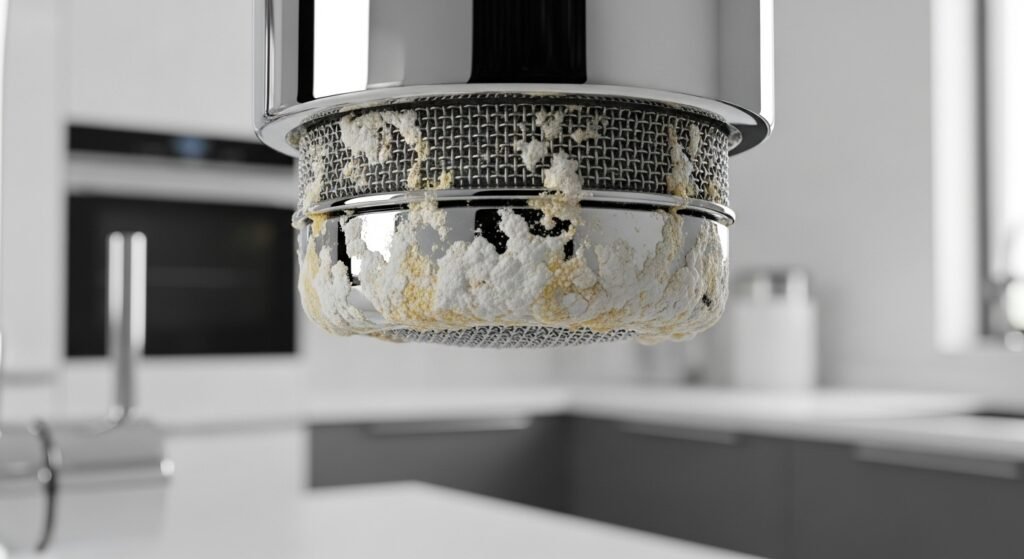
1. Crusty Buildup on Faucets (Limescale)
If your modern fixtures are looking “crusty,” that’s calcium carbonate at work. This white, flaky residue doesn’t just look bad; it can permanently pit and damage your chrome and stainless steel.
Limescale buildup is a “silent killer” for your expensive fixtures
2. Cloudy or “Milky” Ice Cubes
Pure water freezes clear. If your ice cubes look white and opaque in the center, you are literally freezing concentrated minerals. Not exactly the “refreshing” drink you were looking for.
[INSERT PHOTO 2: CLOUDY ICE]
3. Rough, “Sandpaper” Towels
Do your towels feel stiff and scratchy even after using fabric softener? Hard water minerals get trapped in the fabric fibers, causing them to lose their fluff and feel like sandpaper against your skin.
[INSERT PHOTO 3: STIFF TOWELS]
4. Permanent Spots on Glassware
That “foggy” look on your wine glasses isn’t just old age—it’s etched mineral deposits. If your dishwasher leaves spots, your water is working against your detergent.
[INSERT PHOTO 4: SPOTTED GLASS]
5. Low Water Pressure
If your showerhead feels “lazy” or the spray is uneven, minerals are likely clogging the internal nozzles. Over time, this buildup can migrate into your pipes, leading to expensive plumbing repairs.
[INSERT PHOTO 5: CLOGGED SHOWER]
6. Stubborn Soap Scum
Ever wonder why your shower doors are so hard to clean? Soap scum is a chemical reaction between hard water and soap, creating a waxy, grey film that is notoriously difficult to scrub.
[INSERT PHOTO 6: SOAP SCUM]
7. Sticky or “Squeaky” Skin
That “squeaky clean” feeling after a shower is actually a red flag. It means a film of soap residue hasn’t fully rinsed off your body because the minerals in the water won’t let the soap dissolve.
[INSERT PHOTO 7: STICKY SKIN]
8. Dull, Straw-Like Hair
Hard water acts like a barrier on your hair, preventing moisture from getting in. This leads to brittle, frizzy, and “limp” hair that resists even the best salon-grade conditioners.
[INSERT PHOTO 8: DULL HAIR]
9. Faded, Ashy Laundry
Does your favorite black t-shirt look grey after just a few washes? Hard water prevents deep cleaning and traps dirt and minerals in the threads, making your clothes look old and dingy.
[INSERT PHOTO 9: FADED LAUNDRY]
10. The “No-Suds” Failure
Try this: Add a few drops of dish soap to a bowl of water and stir. If you get a murky, cloudy mess instead of fluffy bubbles, your water is officially “hard.”
[INSERT PHOTO 10: NO-SUDS TEST]
Stop the Damage with ScaleFreeLife
If you recognize even three of these signs, your home is at risk of long-term mineral damage. At ScaleFreeLife, we specialize in high-performance water filtration solutions for every lifestyle—whether you’re in a Dallas apartment, a suburban home, or living the RV life.
Don’t let liquid rock ruin your home. Click here to find your ScaleFreeLife solution today!