
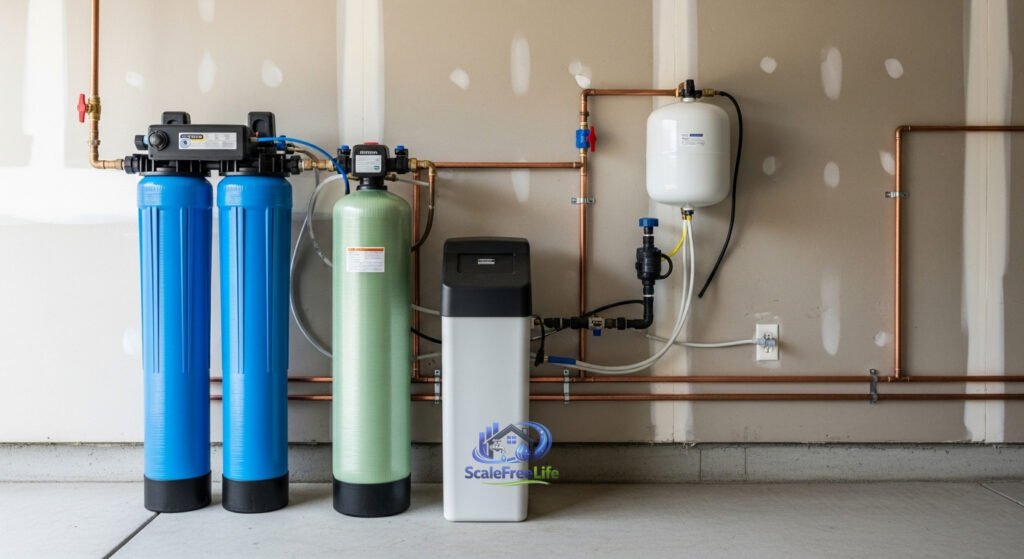
A whole-house water filtration system—often called a Point-of-Entry (POE) system—is the ultimate “gatekeeper” for your home. Unlike small filters that sit on your kitchen counter, a POE system is installed where the main water line enters your house.
This means every drop of water that reaches your faucets, showers, and appliances has already been treated. For American homeowners dealing with the typical mineral-heavy water of the suburbs or the chemical odors of municipal lines, these systems are a game-changer for protecting both health and property.
How the Filtration Process Works
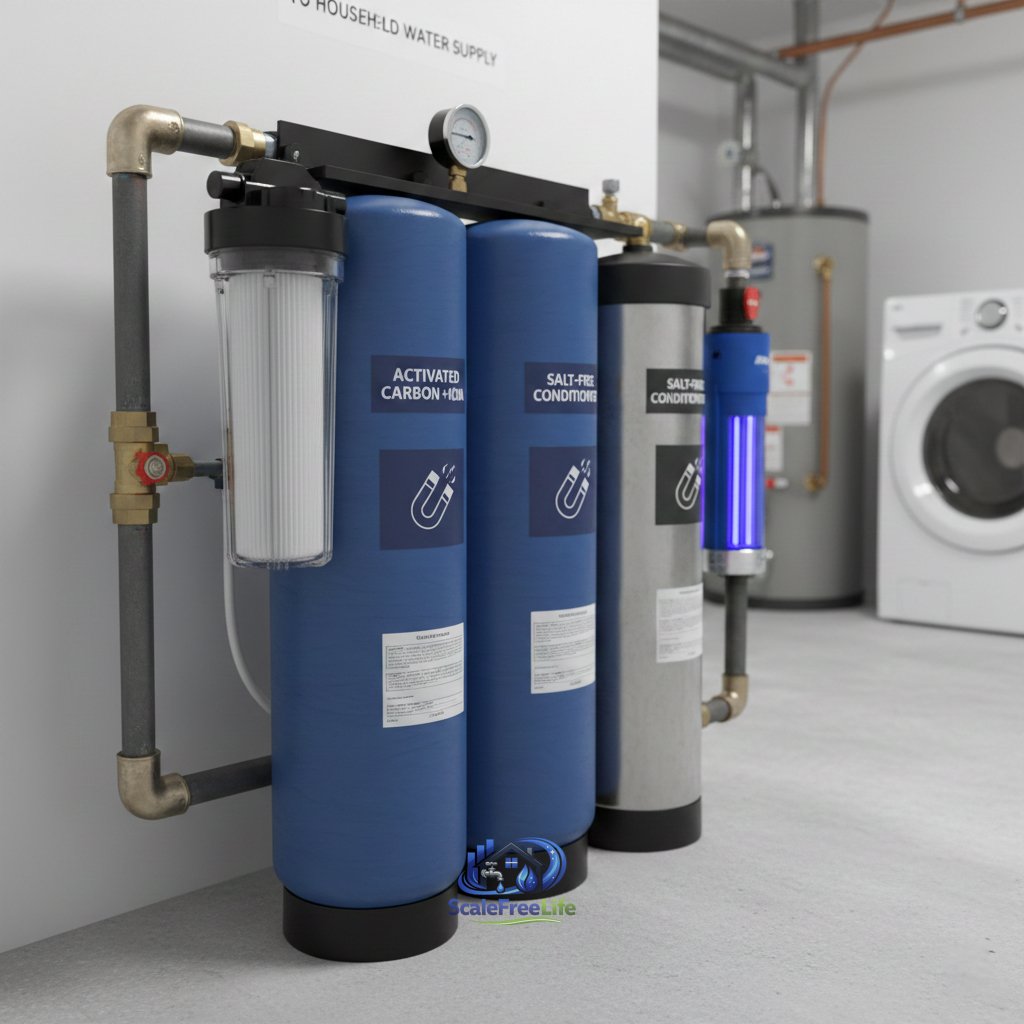
Most high-quality whole-house systems use a multi-stage approach. Think of it as a series of security checkpoints, each designed to catch a specific type of “intruder.”
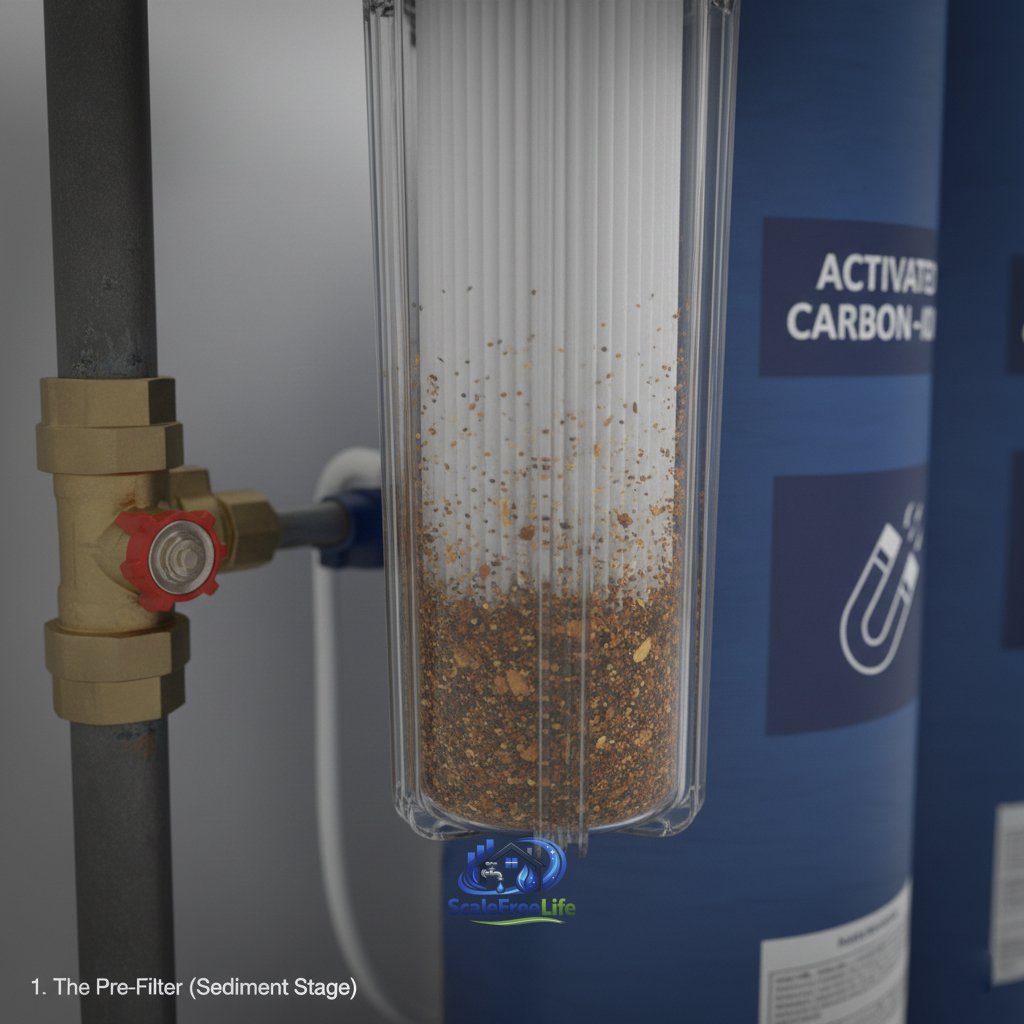
1. The Pre-Filter (Sediment Stage)
The first line of defense is a mechanical filter. Its job is to catch large physical particles like sand, silt, and rust. This is crucial for preventing “pitting” in your pipes and keeping grit out of your washing machine’s delicate valves.
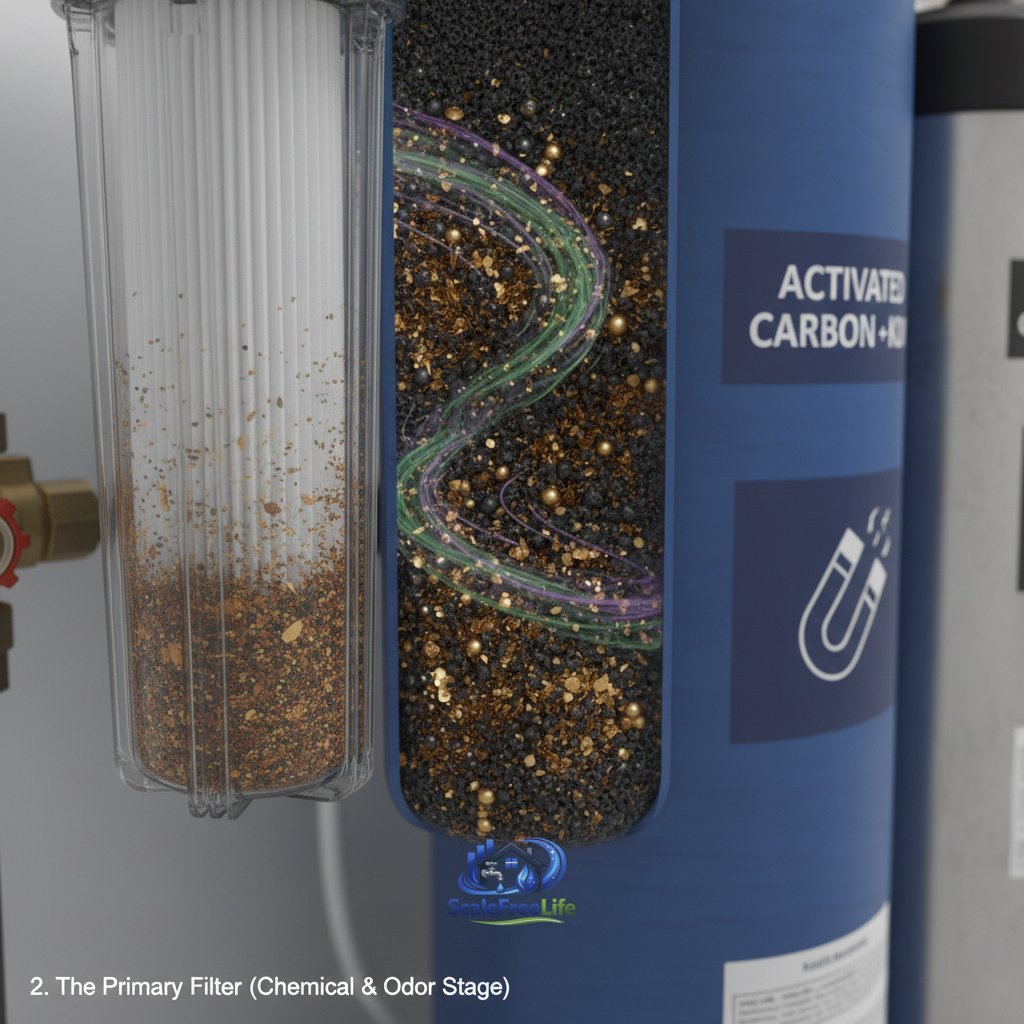
2. The Primary Filter (Chemical & Odor Stage)
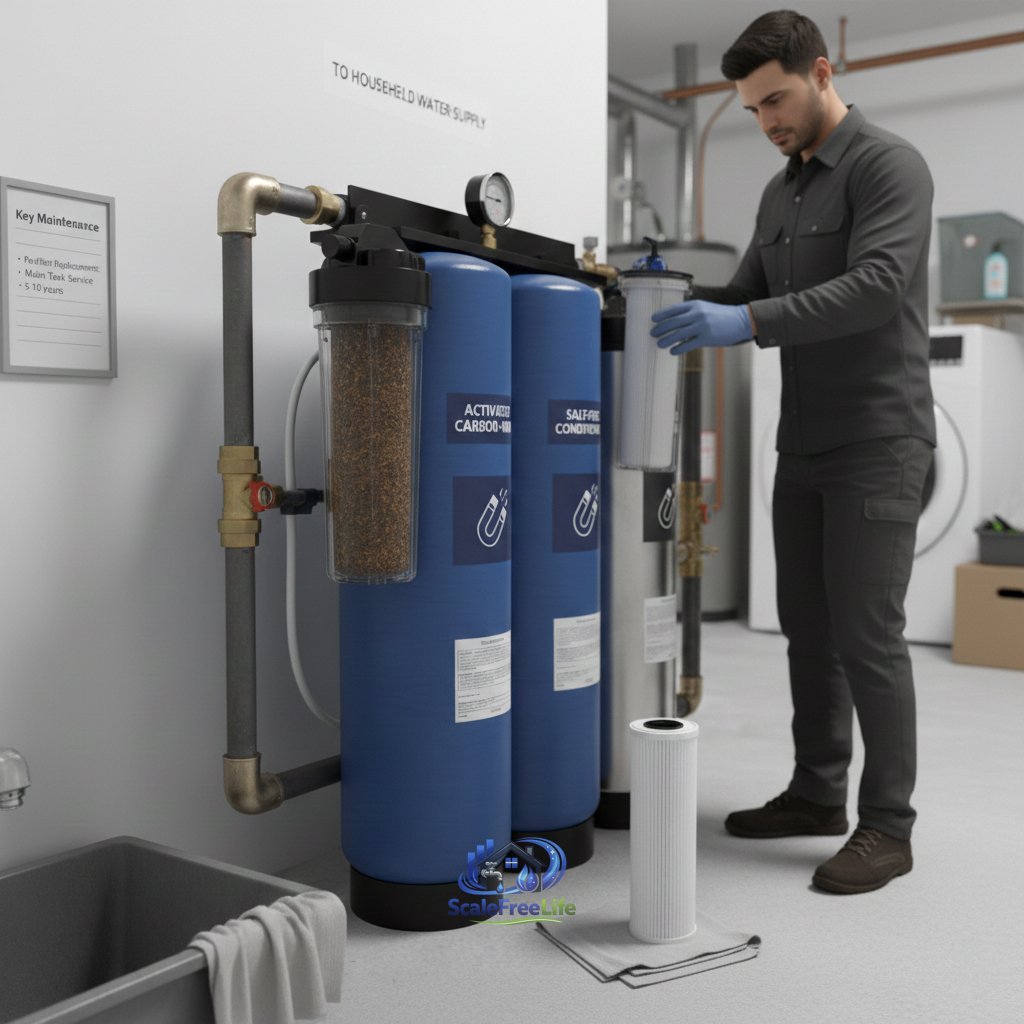
Water then flows through a tank containing Activated Carbon or KDF media.
- Activated Carbon: Acts like a magnet for organic chemicals, removing the “swimming pool” smell of chlorine.
- KDF (Kinetic Degradation Fluxion): Uses copper and zinc to neutralize heavy metals and inhibit the growth of bacteria and algae inside the system.
3. Specialty Filtration (Problem-Solving Stage)
Depending on your local water report, you might have an additional stage for specific issues:
- Iron & Manganese: Removes the minerals that cause orange or brown staining on porcelain.
- UV Purification: Uses ultraviolet light to scramble the DNA of bacteria and viruses—a must-have for homes on private wells.
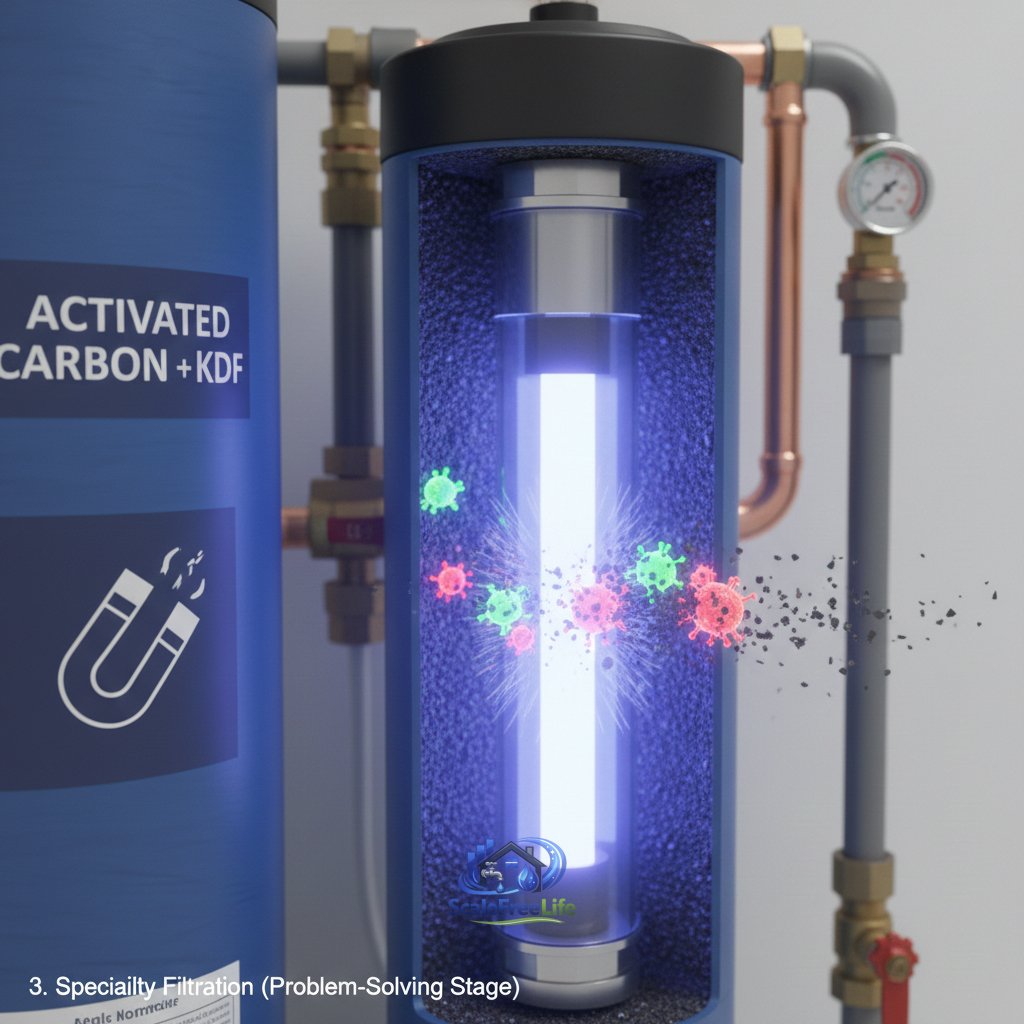
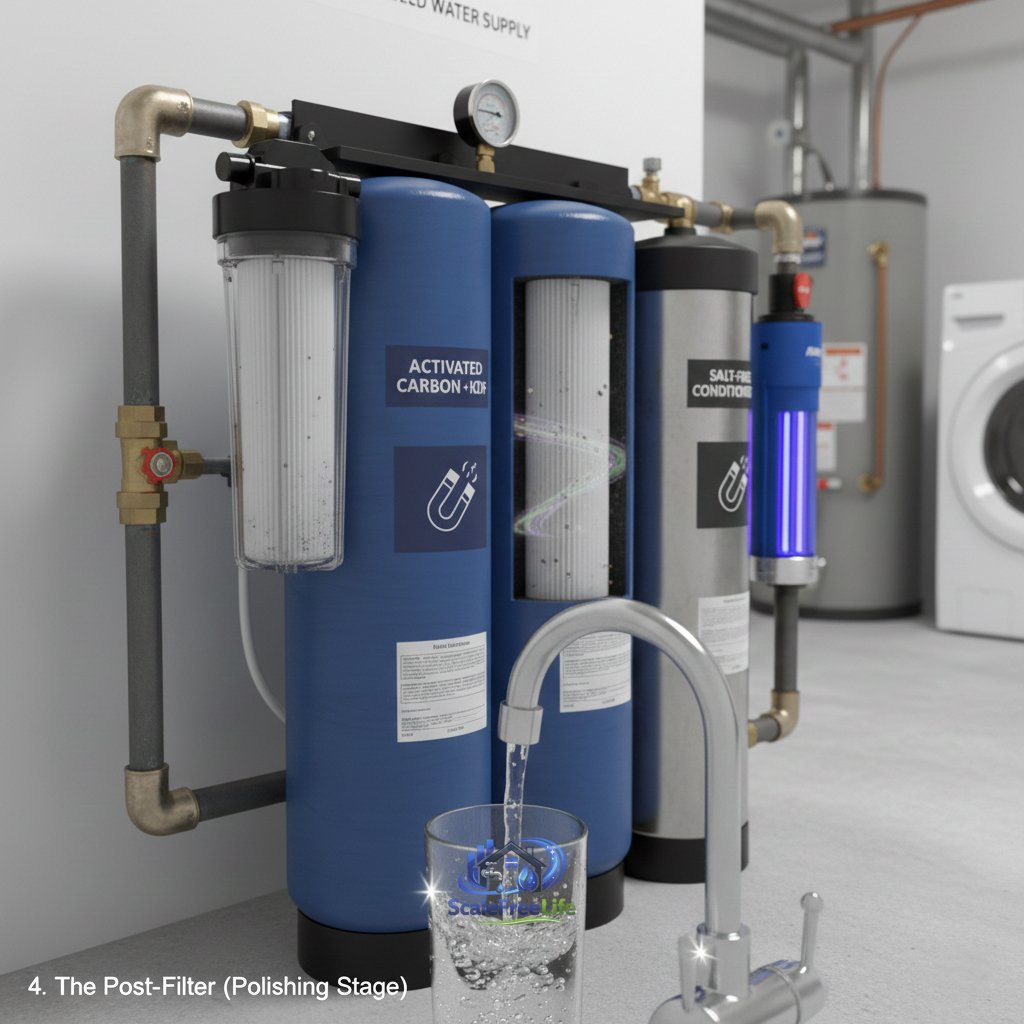
4. The Post-Filter (Polishing Stage)
The final stage is a ultra-fine filter that catches any microscopic particles that managed to slip through the previous steps, ensuring the water is crystal clear when it hits your glass.
Why “Hard Water” is Your Home’s Silent Enemy
In the USA, over 85% of homes have hard water. While “hard” water (water high in calcium and magnesium) isn’t a health hazard, it is a financial hazard.
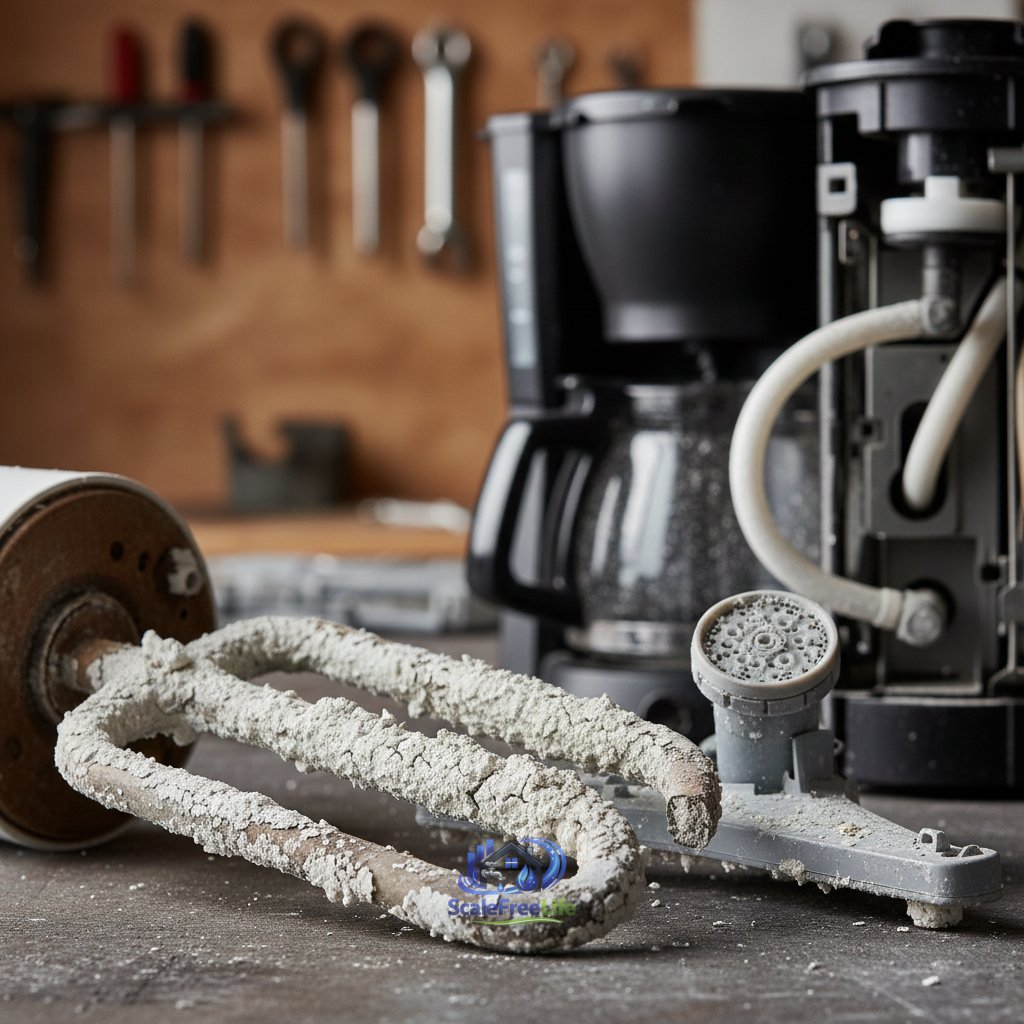
- Appliance Death: Hard water creates scale buildup inside your water heater, dishwasher, and coffee maker. This scale acts as an insulator, forcing your appliances to work harder, use more energy, and eventually burn out years early.
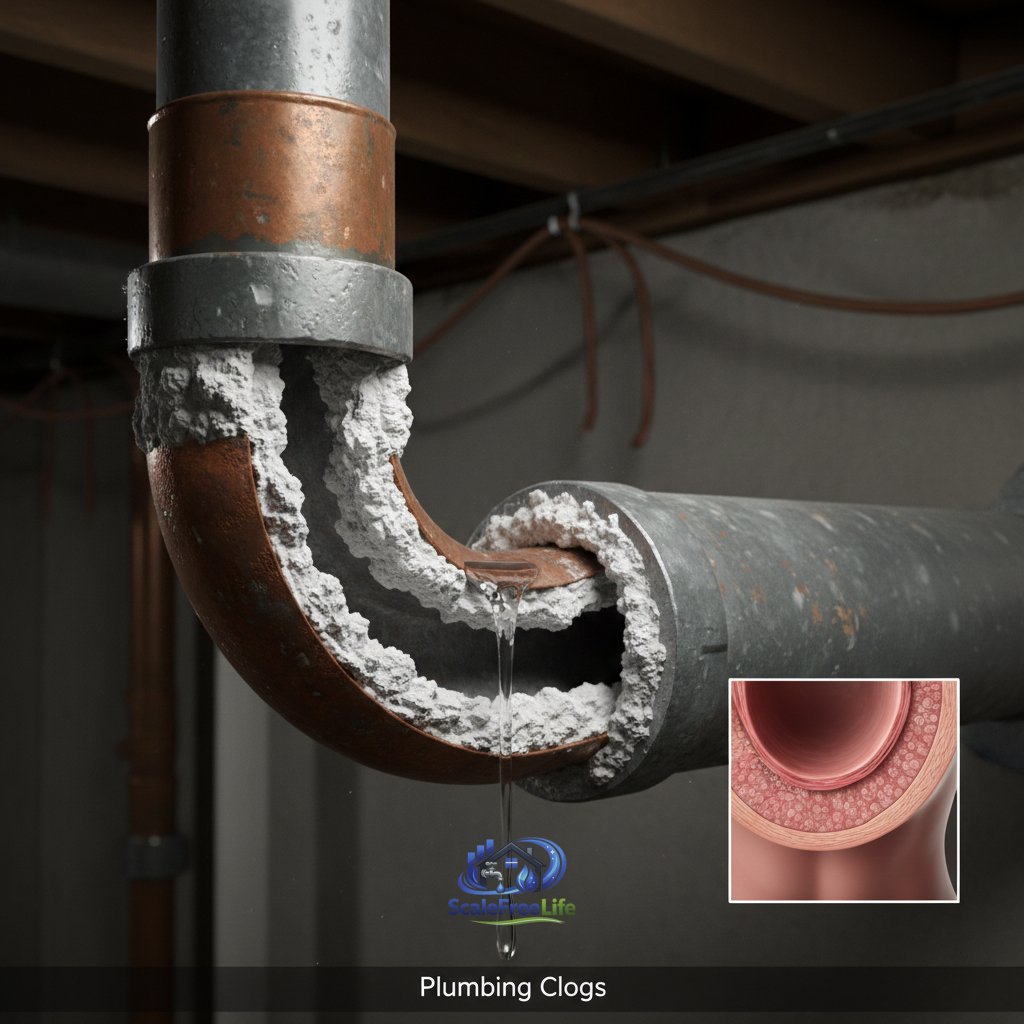
- Plumbing Clogs: Over time, mineral deposits narrow the diameter of your pipes—much like cholesterol in an artery—reducing water pressure throughout the house.
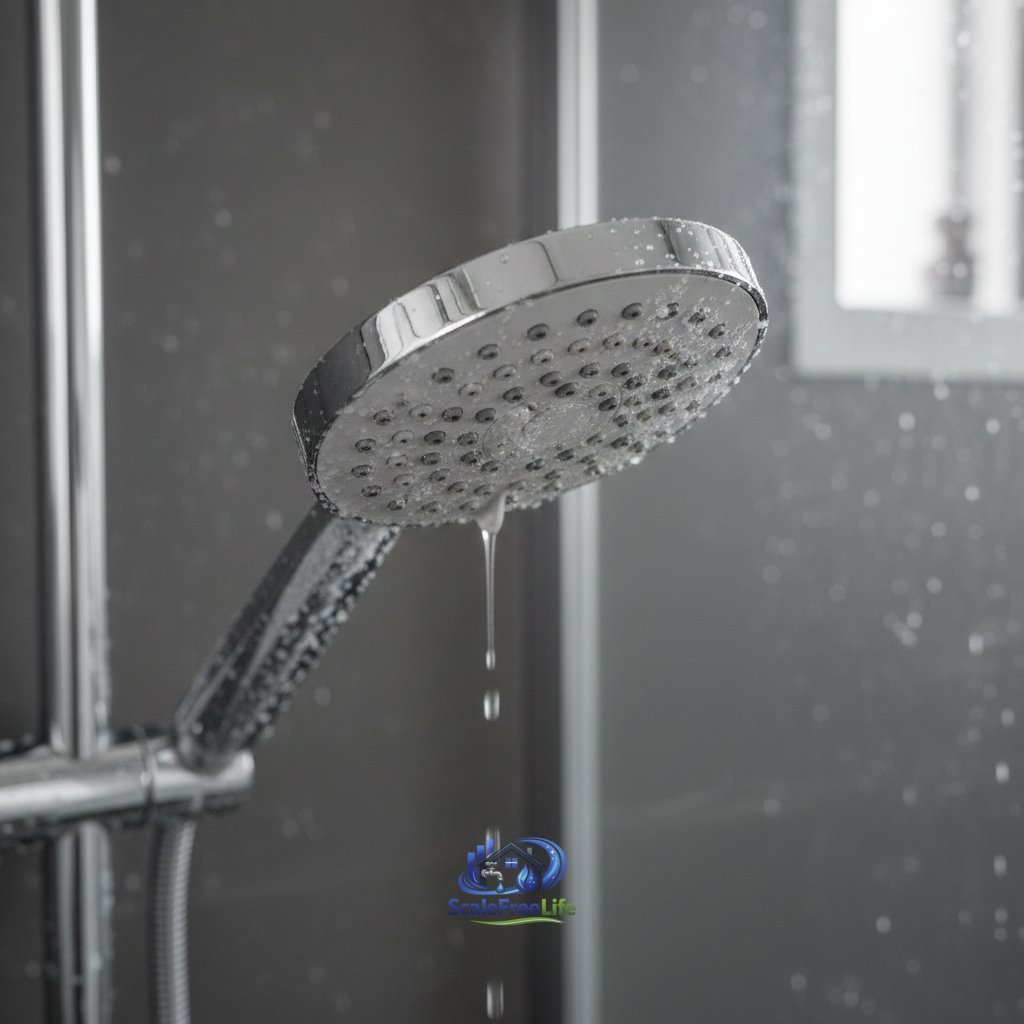
- Home Aesthetics: Those white, chalky spots on your glass shower doors and chrome fixtures? That’s hard water damage. Once it etches into the surface, it can be permanent.
The Transition to “Clear” Filtration
Many homeowners are moving away from traditional salt-based softeners in favor of clear filtration and salt-free conditioners. These modern systems provide the best of both worlds: they remove harmful chemicals and sediment while neutralizing the “sticky” nature of hard water minerals without the slimy feel or the need to haul heavy bags of salt.
Key Maintenance to Keep in Mind
To keep your system running at peak performance, you’ll generally need to:
- Replace the Pre-filter: Every 3–6 months (depending on how much sediment is in your water).
- Main Tank Service: Every 5–10 years for high-capacity systems.
Ready to Protect Your Investment?
Investing in a whole-house system isn’t just about better-tasting water; it’s about extending the life of your home’s infrastructure following ScaleFreeLife approach.